
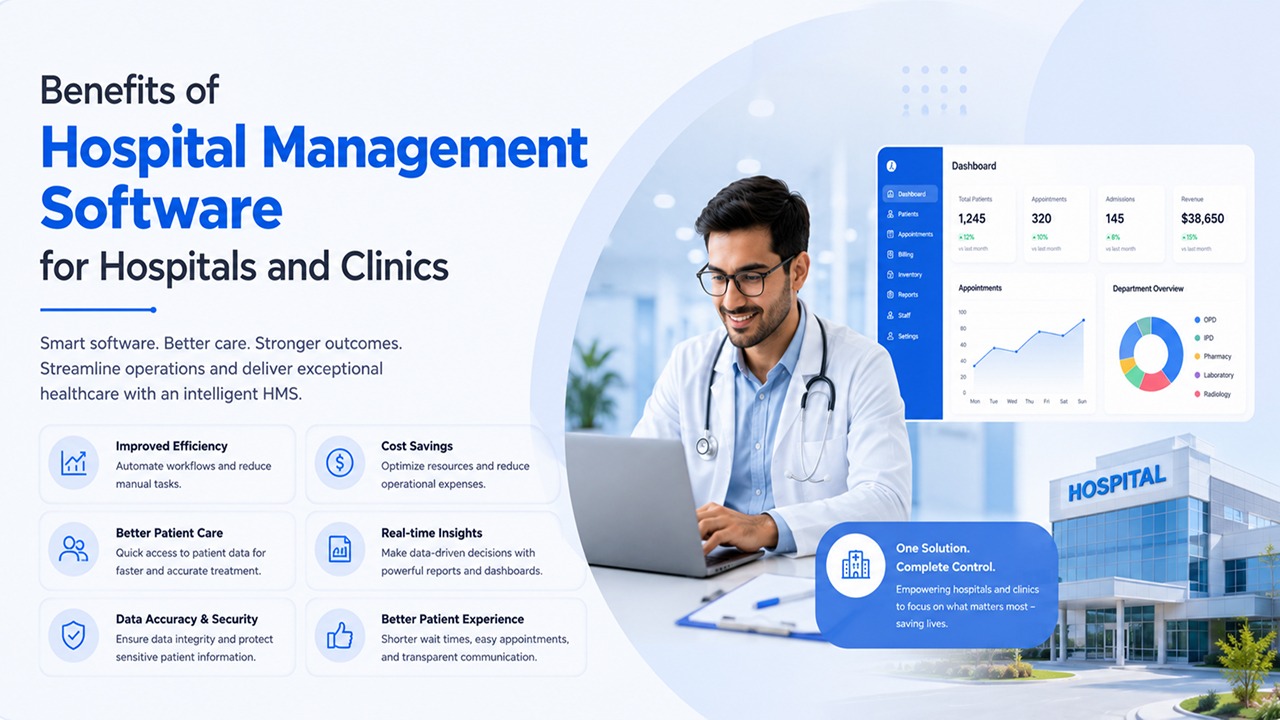
In the healthcare industry, digital transformation is moving pretty fast, and hospital management software is turning into a real must-have thing, to improve day to day operations and patient care it just helps a lot honestly. For hospitals and clinics, the obstacles are still there, like keeping patient records organized (or at least organized enough), coordinating appointment timing, dealing with billing workflows, and trying to sync multiple departments that all run a little differently, even when they share the same building. When the right software solution gets put in place, healthcare teams can automate these routine actions, reduce admin burden, and generally offer patients a smoother experience, yeah.
Right now, a lot of healthcare organizations are investing in strong hospital management software pretty much to smooth processes out, make internal communication easier and keep data management more accurate . Choosing the best hospital management software solution in practice supports hospitals and clinics by raising productivity, cutting down errors, and enabling decision making with real-time visibility, plus useful reporting that actually matters. Also, the major hospital management software companies keep introducing newer capabilities, like cloud integration, telemedicine support, and more advanced analytics, because the healthcare sector keeps shifting. So it feels like hospital management software has become a key piece of modern healthcare management and even influences the broader way services are delivered step by step.
Understanding Hospital Management Software
A hospital management software system is basically a digital platform meant to streamline and automate the everyday running of hospitals and clinics. It kinda puts together those daily chores like patient registration, appointment timing, billing, pharmacy management, electronic medical records, and reporting, all in one centralized spot, not really scattered every where. And since the demand for quicker healthcare service keeps increasing, hospital management software development is now sort of essential for organizations that want to boost operational efficiency, along with patient attention.
Nowadays a lot of healthcare providers lean on a top hospital management software solution, not only to cut down on admin workload but also to reduce those small blunders and help with smoother communication between departments. Also, a solid hospital management software solution typically offers access to real time data, better resource oversight, and decision support that feels more dependable. Plenty of hospital management software companies now roll out cloud based plus customizable options, so healthcare facilities of different sizes can tweak their workflows, improve patient engagement, and reach better outcomes, at the same time without too much friction.
Why Hospitals and Clinics Need Hospital Management Software
Hospitals and clinics are getting more and more into hospital management software, sort of for keeping things streamlined, boosting patient care, and also reducing the whole administrative burden. When processes stay manual, well, things can go sideways, with scheduling clashes, those little billing mishaps and patient records that become kinda hard to manage, in a tidy, organized way. So digital transformation starts to feel not optional, more like mandatory.
During the hospital management software development phase, healthcare teams can automate patient registration, appointment timing, billing tasks, inventory control, and even the ongoing care and upkeep of medical records. In practice, using the best hospital management software also helps teams communicate in a clearer manner across departments, plus it gives real time visibility into key patient information, so decisions happen faster with less guessing.
On top of that, newer platforms usually strengthen data security, and they help with compliance linked to the usual industry requirements. Choosing the best hospital management software solution lets hospitals and clinics push operational efficiency, lower costs, and offer patients a smoother overall experience. And because healthcare needs keep climbing, a lot of hospital management software companies are building more advanced platforms that can grow with demand, run via cloud access, and include connected healthcare services, which modern medical facilities depend on day to day operations.
Key Benefits of Hospital Management Software
Hospital management software system, kind of helps hospitals and clinics streamline everyday operations, boost patient care and reduce a good chunk of those admin burdens , in real life. It does practical automation like appointment scheduling, billing, managing patient records, and even inventory tracking, so healthcare providers can push efficiency higher and also cut down on the small errors that happen in manual workflows.
Plus, a lot of modern solutions offer centralized access to patient data, which means doctors, nurses and other clinicians can work together more smoothly and make faster, better calls. With solid hospital management software development, healthcare orgs can roll out tailored features that match their own operational reality, rather than forcing everything to fit a generic arrangement.
Also, leading hospital management software companies keep adding newer tech cloud computing, artificial intelligence, and analytics, to name a few so the whole care delivery experience gets improved. Choosing a top hospital management software platform can help with regulatory compliance, optimize resource use, and raise overall patient satisfaction. Ultimately, investing in a strong hospital management software solution lets hospitals and clinics deliver high quality care while improving productivity, trimming costs, and supporting long term digital transformation efforts.
Benefits for Healthcare Professionals
A modern hospital management software system sort of changes how daily stuff goes for healthcare professionals, mainly because it cuts down on admin burdens and lets them spend more time on patient care. When patient records are kept in one place, doctors, nurses, and admin staff can pull up the right info faster, and that tends to help with diagnosis and treatment choices. Also, good hospital management software development improves the way departments work together, since real-time data sharing and smoother communication become possible.
Lots of healthcare providers today go for leading hospital management software solutions, not just because they look polished, but because they automate scheduling, prescription handling, billing, and reporting, which boosts productivity and also reduces avoidable mistakes. Then there’s the security side too: the best hospital management software solution gives secure access to medical data, supports compliance with healthcare rules and laws, and helps protect sensitive patient information.
Financial Benefits of Hospital Management Software
Adding hospital management software really can lead to tangible financial wins for hospitals and clinics, sort of like when the dull routine gets automated and somehow the available resources end up being used more wisely. Lately, hospital management solutions often reduce the heap of paperwork, they limit manual mistakes, and billing + invoicing starts moving with less friction. When that finally “clicks”, reimbursements tend to arrive faster, so cash flow stays more even.
On top of that, automated inventory and pharmacy management keeps overstocking under control, and it trims those extra expenses that quietly snowball over time. Then there is the patient records side of it, and if those records remain accurate plus insurance claim processing is wired into the same workflow, the likelihood of billing errors drops. That usually translates into fewer claim rejections and less back and forth between teams. Also, choosing the right hospital management software, basically the so called best fit for your exact layout, can lift staff output.
The reasoning is pretty straightforward, repetitive tasks get reduced, and clinicians can point their focus back toward actual care instead of the paperwork parade. For healthcare groups planning a hospital management system project, the longer term return tends to show up as lower day to day operating costs, smoother handling of daily work, and more dependable financial reporting. Ultimately, selecting the best hospital management system software helps organizations steer decisions with data, support gradual growth, and keep delivering high quality patient services
Operational Benefits of Hospital Management Software
Putting hospital management software in place, tends to make hospitals and clinics run way more smoothly, even if it kinda feels complex at first because it basically takes a lot of the routine stuff off people shoulders, and helps sort out the everyday flow. In most modern systems , patient records are stored in one place, appointments can be arranged without all the back and forth, billing gets handled more consistently, and inventory management becomes much more understandable, so the paperwork load eases up and the odds of mistakes drop too.
With automation, medical staff can pull up the current details when they need them , and that supports coordination between departments and helps make quicker decisions, especially when things get hectic. On top of that, a decent hospital management system project, if it’s assembled properly, can improve how resources are used, like staff scheduling that lines up with demand, stronger bed control, and tighter monitoring of medical supplies.
The stronger software also includes analytics and reporting, so administrators can look at performance trends and figure out where small changes really matter. And since many options are cloud based, plus there’s mobile access too, operations can stay kind of flexible, which in practice often bumps productivity.
Security and Compliance Benefits
Modern hospital management software, kind of sort, offers pretty solid security and compliance features, that help hospitals and clinics shield the sensitive patient information in a more practical way. It usually has advanced encryption, role-based access controls, plus secure authentication methods so only the people who are authorized can reach medical records and also the administrative side details.
With that mix, these systems tend to feel more dependable and they lower the odds of data breaches, or access that should not happen in the first place. And the better hospital management tools often include audit trails, automated backups, and compliance reporting tools which then helps healthcare organizations stay aligned with regulatory requirements, while protecting data integrity too.
When a hospital management system project is planned carefully, it also supports alignment with healthcare standards like HIPAA and GDPR, so patient privacy stays on track, and legal compliance does not wander off. For providers who are searching for the best hospital management system software, they often gravitate toward options that deliver solid cyber security protection, easier compliance administration, and secure data storage. In that way they can provide quality care, while guarding the really critical healthcare information, day after day.
Advanced Features That Enhance Benefits
Modern hospital management software, it kinda does more than the usual admin stuff, it adds advanced capabilities that boost efficiency for everyone and at the same time improves patient care. With cloud-based deployments, healthcare teams can pull information securely from virtually anywhere, so the whole hospital management system becomes more flexible and scalable, not just for today but also for later. Telemedicine integration also matters it enables virtual visits, so hospitals and clinics can expand their range of services while making the patient experience easier.
Then there are artificial intelligence tools along with predictive analytics, they help with quicker evaluations, smoother allocation of resources, and ultimately smarter, data-driven choices. On top of that, mobile applications and patient portals give people more control, they can arrange appointments, review medical records, and message healthcare providers in real time. Also automated reporting, and smart inventory management, reduces the manual routines that slow teams down and it lowers operational costs too.
So, these kinds of capabilities feel essential for any hospital management system project that aims to deliver truly superior healthcare services. Organizations that are looking for the best hospital management system software, or the best hospital management software, are more and more focusing on these advanced elements to strengthen operational performance and deliver a really exceptional patient journey.
Challenges in Implementing Hospital Management Software
Getting hospital management software set up can really help things move smoother , but a lot of healthcare organizations still end up stumbling a bit when they attempt the rollout. One major snag is staff resistance to change, since employees often need a good stretch of time and honestly some solid practical direction, not just a rushed walkthrough. Otherwise they don’t feel comfortable with these new hospital management systems, and they kind of drag their feet.
Another annoyance pops up fast during data migration from older tools, because things can get messy real quick, and there are genuine chances of leaving certain details behind or letting weird inconsistencies slide in quietly. Then there’s the whole “can it communicate” question, with existing applications, lab workflows, and billing systems. During deployment that kind of integration can cause technical trouble, seemingly out of nowhere, even when everything looked fine in planning.
There’s also the budget reality staring you right in the face. Tight funds, plus the actual rollout costs, can stop smaller clinics from adopting even highly capable hospital management software. On top of that, there’s the need to meet healthcare regulations while also keeping a strong cybersecurity posture. That part never feels like a clean straight line, and it tends to stack extra layers of complexity on teams, so they’re dealing with multiple concerns all at once.
Future of Hospital Management Software
The future of hospital management software sort of drifts toward automation, smarter calls, and a more personal patient journey, and somehow it all feels less boxed in lately. Modern systems are now leaning more heavily on artificial intelligence, cloud computing, and predictive analytics so both clinical workflows and administrative routines can run faster and feel less tangled. Telemedicine, remote patient monitoring, and mobile health apps are showing up not just as “nice to have” features but more like essential pieces of the whole setup for many providers.
As the tech keeps moving, the best hospital management software will probably feel like one connected organism meaning it handles smooth integration with electronic health records, links up with medical devices, and exchanges information with third party healthcare platforms without too much friction. And yeah, any hospital management system project still has to treat cybersecurity, interoperability, and data privacy as top priorities, because healthcare compliance rules keep changing, almost constantly.
Also, AI driven insights and real time analytics will give hospitals and clinics more grounded guidance, making it easier to use resources efficiently and improving patient outcomes in a practical way. So organizations that want the best hospital management system software are likely to invest more in scalable cloud based solutions that support digital transformation and deliver care that is genuinely patient centric.
Conclusion
Hospital management software has sort of become a needed thing for hospitals and clinics, not just because it sounds modern but because it helps day to day stuff run smoother, supports better patient care, and also makes all the admin busywork way easier. When you put money into a reliable solution, healthcare teams can lower the chance of mistakes, handle resources more wisely, and later make decisions from real data not guesses. And since there are a ton of hospital management software companies out there, most with pretty advanced platforms, picking the top hospital management software can actually change how a facility operates in practice. Going for the best hospital management software option gives you space to expand, strong protection, and a solid route toward long term results, so healthcare organizations can deliver a calmer patient experience and still aim for sustainable growth .